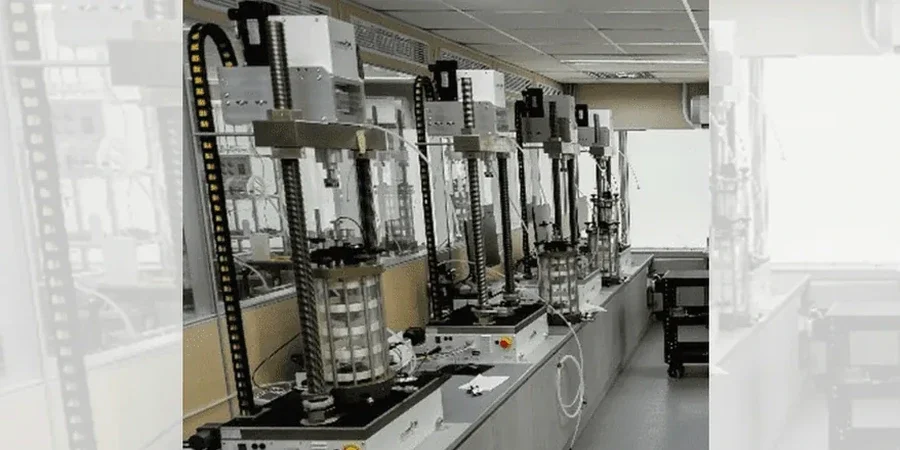
In Slough, you learn quickly that London Clay dictates the rules. The stuff looks solid in a trench, then swells after a wet winter and shrinks to concrete-hard in summer. We run triaxial tests precisely because the strength parameters change with moisture content, and guessing gets expensive. Our lab team sees samples from Colnbrook to Langley, and the consolidation history tells a different story on every site. A CPT test in the field gives us the stratigraphy, but the triaxial cell is where we measure the effective stress parameters that control foundation settlement. Without that data, you are designing on assumptions, and assumptions fail in this geology. We run consolidated undrained tests as standard, with pore pressure measurement per BS 1377-8.
The effective friction angle of London Clay varies by up to 4 degrees depending on the weathering grade. That 4 degrees changes foundation size.