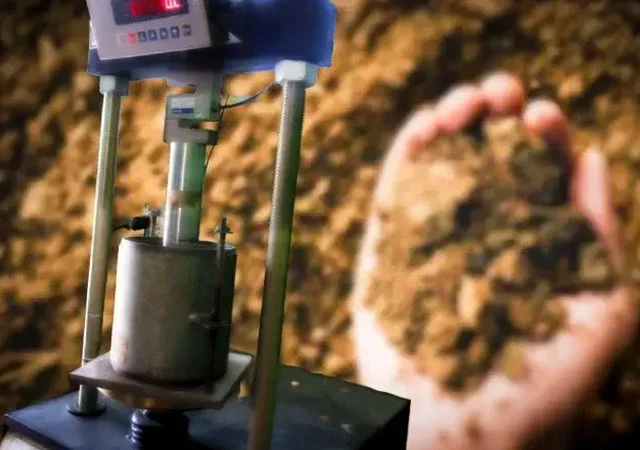
We see it often in Slough. A contractor submits a pavement design based on assumed CBR values, only for the subgrade to fail under the first heavy rains. The Thames Valley has pockets of soft alluvium and made ground that don't behave like textbook soils. A laboratory CBR test on a remoulded sample at the correct density and moisture content gives you a real number you can trust. Not a guess. We run the test to BS 1377:1990, soaking the sample for 96 hours to simulate worst-case field conditions after prolonged wet weather. If your borehole logs show variable ground, pairing the CBR with an in-situ permeability test helps you understand drainage behaviour before you finalise the pavement thickness. That combination saves costly overdesign or premature failure.
A soaked CBR value below 2% in the Thames Valley means you need either a capping layer or a complete rethink of your pavement foundation strategy.