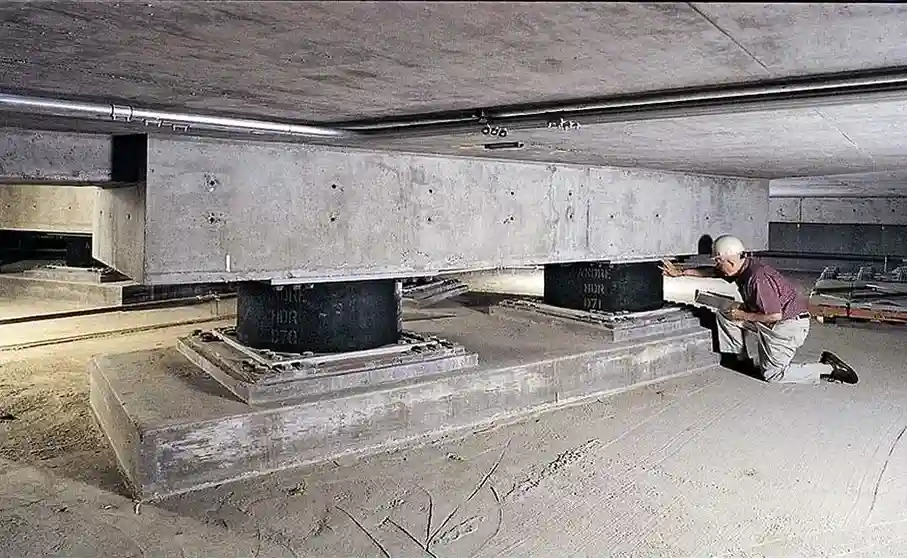
The contrast between the historic brick-built terraces of Upton and the modern glass-clad office blocks rising near Slough Trading Estate is more than architectural. Beneath the surface, the London Clay Formation dictates a completely different seismic response for a shallow-founded Victorian structure versus a deep-basement commercial block. Slough sits on the western edge of the London Basin, where the clay thickness can exceed 50 metres near the Jubilee River floodplain. Our base isolation seismic design approach begins with this geological reality. A standard seismic refraction survey will map the clay-to-gravel transition, but for base isolation we need the dynamic stiffness degradation curves that only a resonant column test on undisturbed samples can provide. When designing for the Desborough Avenue corridor, we combine site-specific response spectra with the isolation system's bilinear model. This isn't textbook engineering: the clay's sensitivity to seasonal moisture changes in Slough's 600 mm annual rainfall means we often recommend triple-friction pendulum bearings over laminated elastomeric isolators to handle the variable superstructure flexibility.
Base isolation in Slough isn't about earthquake magnitude; it's about the London Clay's amplification of long-period motion and the 50% difference in stiffness between summer and winter profiles.