GEOTECHNICAL ENGINEERING1
SLOUGH
HomeIn-Situ TestingField density test (sand cone method)

Field density testing in Slough: getting compaction right

Sound ground. Sound decisions.

LEARN MORE

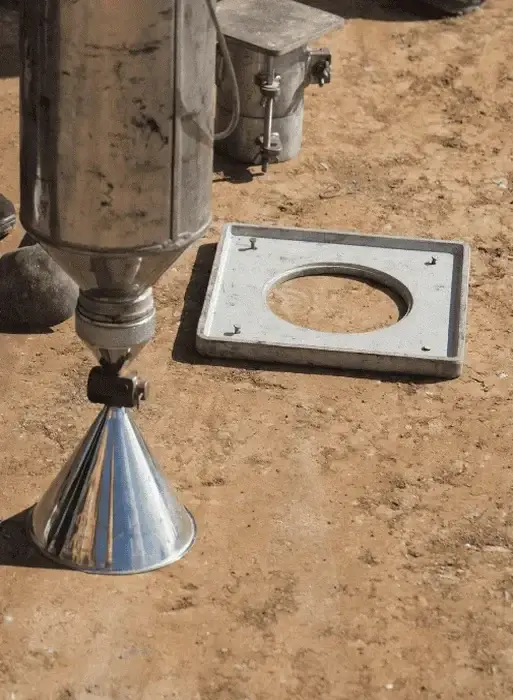
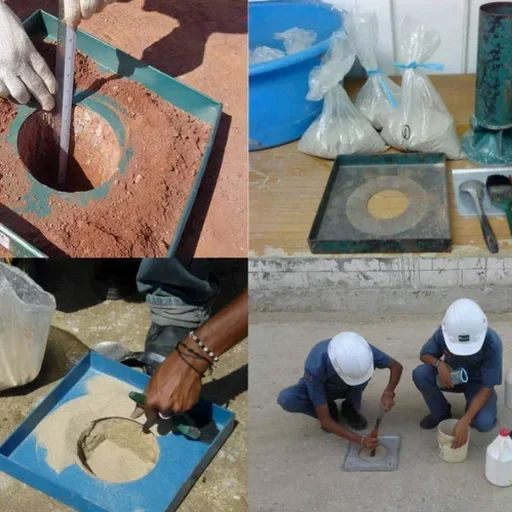
The sand cone apparatus looks simple: a plastic jar, a brass cone and a base plate. But when you're standing on a windy site off the A4 in Slough, that device has to perform flawlessly. We pour dry, graded sand into a carefully excavated hole and measure the volume displaced. It's a direct method. No electronics. No guesswork. The jar weighs roughly 4 kg when full, and every gram matters when you're calculating in-place density. In our lab, we calibrate the sand before it ever leaves the bench because the rounded grains we use in Slough's conditions must flow consistently. The town sits on a mix of Taplow Gravels over London Clay, with pockets of made ground near the industrial estates. That built-up terrain means we often carry out a sand cone density test right after a plate load test to cross-check the bearing response.

You can't feel 95% compaction. You have to measure it — and in Slough's mixed ground, a single failed test can unravel a whole layer's acceptance.
Our service areas

Scope of work

The ground under Slough changes fast. Over by the Trading Estate, you'll find dense gravels that compact with a stubborn crunch. Move south toward Cippenham and the clay fraction rises. We see this contrast weekly. A road widening job near the M4 demands one approach; a school extension on the north side demands another. The sand cone test gives us the dry density and the relative compaction percentage. We follow BS 1377-9 for the field procedure, pulling a representative sample from the excavation, sealing it immediately, and running the moisture content back in our UKAS-accredited lab. In gravelly material, we sometimes need to run a grain size analysis alongside to confirm the grading envelope matches the specification.
Field density testing in Slough: getting compaction right
Technical reference — Slough

Local geotechnical context

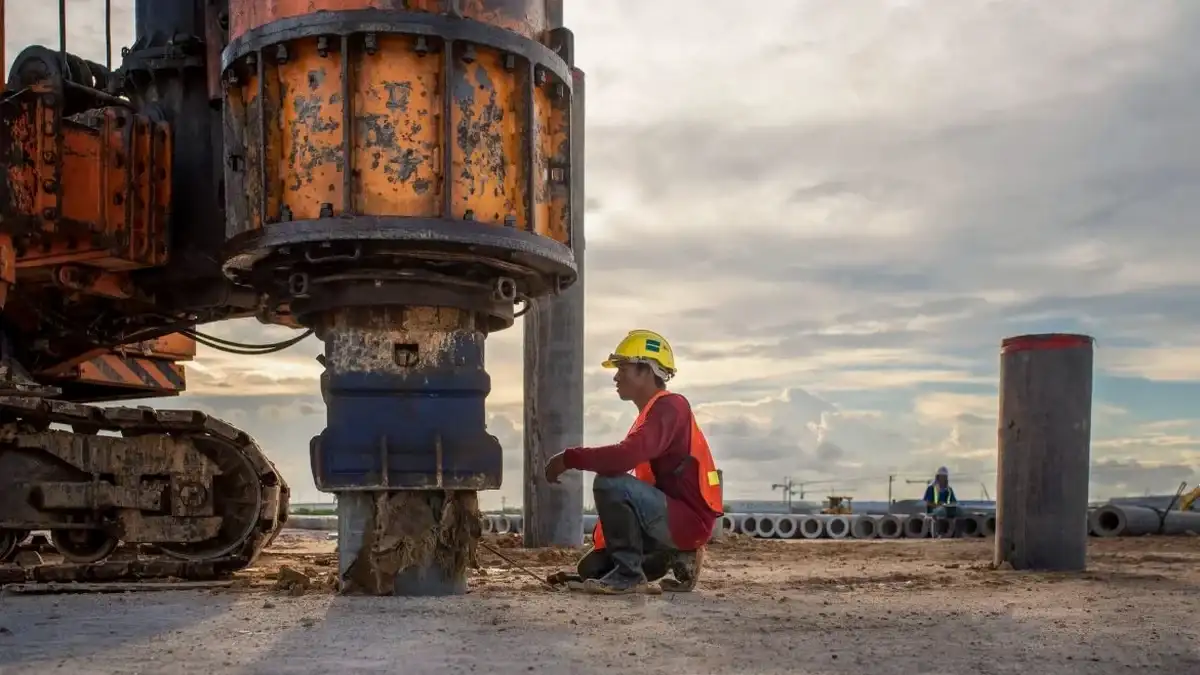
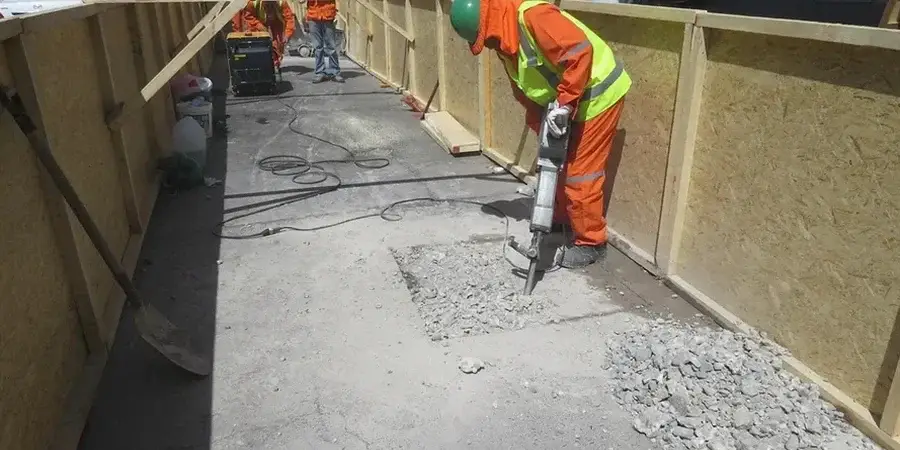
We watched a contractor on a Slough industrial park lay 800 mm of Type 1 fill in one lift. The spec called for 150 mm layers. Their compaction records looked fine on paper, but the sand cone tests told a different story. Cores showed density dropping below 90% in the bottom half. The whole pad had to be ripped out. That's the real cost of skipping a density check after each lift. On a cold February morning, we set up the base plate and excavated a precise hole with a chisel and spoon. The sand flowed. The numbers came back red. The project stopped for three weeks. In areas with historic fill, the risk of differential settlement is higher than anyone admits. A CPT test can help map the weaker zones before you even place the fill.

Need a geotechnical assessment?

Reply within 24h.

Email: contact@geotechnical-engineering1.com

Relevant standards

BS 1377-9:1990 — In-place density tests (sand replacement method), Eurocode 7 (BS EN 1997-2:2007) — Ground investigation and testing, Manual of Contract Documents for Highway Works (MCHW) — Series 600

Reference parameters

ParameterTypical value
Standard test method (UK)BS 1377-9 (sand replacement)
Typical depth range100 mm to 250 mm
Calibration sandGraded (600–300 µm), quartzitic
Sample mass per test1.5 kg to 3.0 kg
Relative compaction target≥ 95% (standard Proctor)
Reporting parameterDry density & air voids

Common questions

How much does a field density test cost in Slough?

For a single sand cone test in Slough, you are looking at £80 to £130. The final figure depends on the number of points, the access conditions on site, and whether we need to run companion lab tests on the same sample.

What is the minimum number of tests I need for a warehouse slab in Slough?

The frequency depends on the specification, but typically we recommend one test per 250 m² per compacted lift. For a warehouse near the Slough Trading Estate, that often means a grid of six to nine points per layer.

Can you test through a geotextile separator?

Yes, but we have to cut a careful window in the fabric and avoid disturbing the subgrade. We then record the presence of the geotextile in the field log so the engineer has full context when interpreting the dry density result.

How long does a single sand cone test take on site?

About 20 minutes per point, assuming reasonably accessible ground. That includes setting the plate, excavating the hole, pouring the sand, recovering the sample and backfilling. Gravelly material takes a bit longer.

Location and service area

We serve projects in Slough and surrounding areas.

View larger map