GEOTECHNICAL ENGINEERING1
SLOUGH
HomeSlopes & WallsActive/passive anchor design

Active and Passive Anchor Design for Slough Ground Conditions

Sound ground. Sound decisions.

LEARN MORE

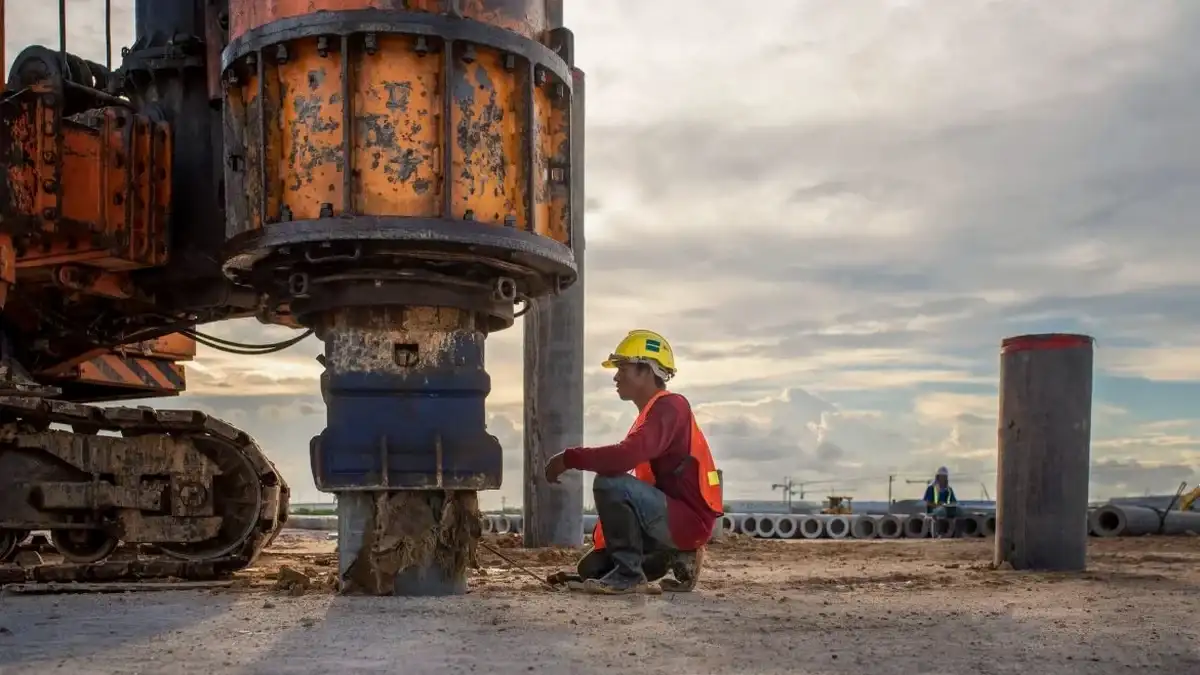
The hydraulic jack is what makes it all happen. When we roll out the hollow-stem auger rig in Slough, it is the stressing equipment that really gives us the performance data. You see the ram extend, the pressure gauge climb, and you know exactly what that anchor tendon is holding in the London Clay. In Slough, the anchors have to lock into the stiff blue-grey clay at depth, well past the weathered brown crust. We typically proof-load to 1.5 times the working load, holding it for fifteen minutes while monitoring creep. A lot of contractors around the Bath Road corridor call us in specifically for this test, because the ground here transitions so fast from gravels into clay. Getting the fixed anchor length right means drilling into that competent stratum, and the jack tells the story. Complementing this, our team often runs a full site investigation with SPT to confirm the exact depth to refusal before we finalise the tendon bond length for any restrained excavation.

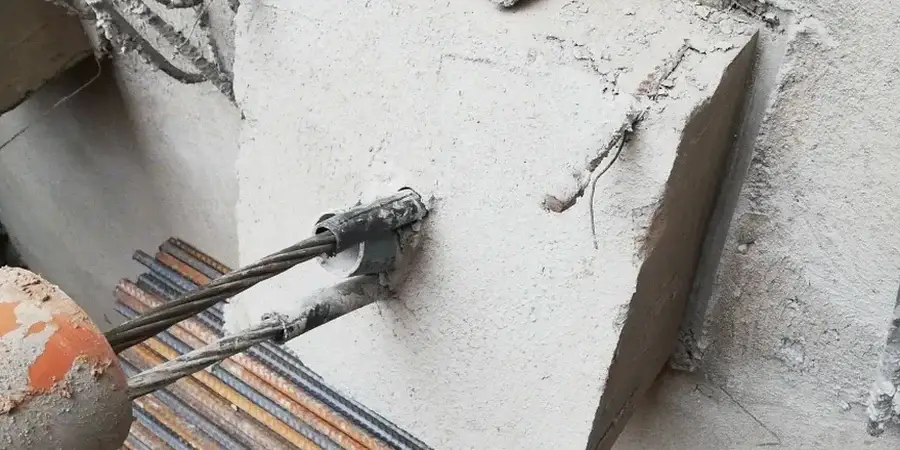
In the transition zone between River Terrace Gravels and London Clay, the free tendon length often dictates whether the anchor behaves actively or passively under load.
Our service areas

Scope of work

The ground under Slough Trading Estate behaves nothing like the soil up near Burnham Beeches. On the Estate, you are dealing with up to five metres of made ground and loose River Terrace Gravels over London Clay—classic conditions for a multi-strand passive anchor. North of the A4, the clay appears much shallower, often with a sandy silt layer that complicates grouting. In our experience, passive anchors work better in the denser clay where the grout-to-ground bond can really develop; active anchors are essential on the Trading Estate side because you need to pre-load the system to minimise lateral movement in the adjacent warehouse footings. We have also learned that pulling a tendon through those gravel lenses without a casing can lead to necking in the grout column. For deep excavations in the town centre, we coordinate the anchor design with our retaining wall solutions to ensure the lateral support system functions as a single unit, not just isolated tiebacks.
Active and Passive Anchor Design for Slough Ground Conditions
Technical reference — Slough

Local geotechnical context

A project near the M4 junction comes to mind—a multi-storey with a 9-metre deep cut right against the motorway boundary. The contractor had assumed a 10-metre bond length would hold, but the lower clay had gravel partings we only picked up on the CPT logs. During stressing, the first anchor crept half a millimetre per log cycle, so we had to de-tension, re-drill deeper, and re-grout. The risk in Slough is assuming uniform clay. When an active anchor fails its proof test, the delay ripples across the entire programme: you lose the excavation bench, the shoring sits idle, and the traffic management on the A-road becomes a liability. For temporary works, a passive anchor system might seem cheaper, but if the ground moves before the structure takes load, you will see cracks in adjacent utilities. The water table in the gravels adds hydrostatic pressure that demands a rigorous waterproofing detail at the anchor head, otherwise you are pumping forever.

Need a geotechnical assessment?

Reply within 24h.

Email: contact@geotechnical-engineering1.com

Relevant standards

BS 8081:2015 – Code of practice for grouted anchors, BS EN 1997-1:2004 (Eurocode 7) – Geotechnical design, BS 5930:2015+A1:2020 – Site investigation, BS EN 1537:2013 – Execution of special geotechnical work (ground anchors)

Reference parameters

ParameterTypical value
Design StandardBS 8081:2015 + EC7
Typical Bond Length3.0 m – 8.0 m in London Clay
Anchor TypeActive (pre-stressed) or Passive (deadman)
Proof Load Test1.5 x Working Load (BS 8081)
Creep Criterion< 2 mm per log cycle of time
Tendon OptionsBar or multi-strand (Dywidag, Macalloy)
Corrosion ProtectionDouble (Class I) in aggressive ground

Common questions

What is the difference between an active and a passive ground anchor?

An active anchor is pre-stressed with a hydraulic jack immediately after grouting, locking a controlled load into the structure to prevent movement. A passive anchor is not pre-stressed; it only develops resistance as the soil begins to deform and the tendon elongates. In Slough, we tend to use active anchors for permanent basement walls on tight urban sites, while passive anchors can work for temporary excavations where minor lateral movement is acceptable.

What does anchor design and testing cost for a project in Slough?

For a typical anchor package in Slough, including the detailed design calculations, the preparation of the method statement, and the on-site suitability and proof load testing, the fee ranges from £950 to £2,970. The final figure depends on the number of anchors, the access constraints, and whether we are dealing with a temporary or permanent installation requiring long-term corrosion monitoring.

How do the Thames Valley gravels affect anchor performance?

The River Terrace Gravels overlying the London Clay create a tricky two-layer system. The gravels are permeable and loose, offering poor grout-to-ground bond. We advance a casing through the gravels to seal the borehole before drilling into the underlying clay for the fixed anchor length. This sequential casing method prevents grout loss into the gravels and stops groundwater from washing out the cement before it sets, which is a common problem on sites near the Jubilee River.

Location and service area

We serve projects in Slough and surrounding areas.

View larger map