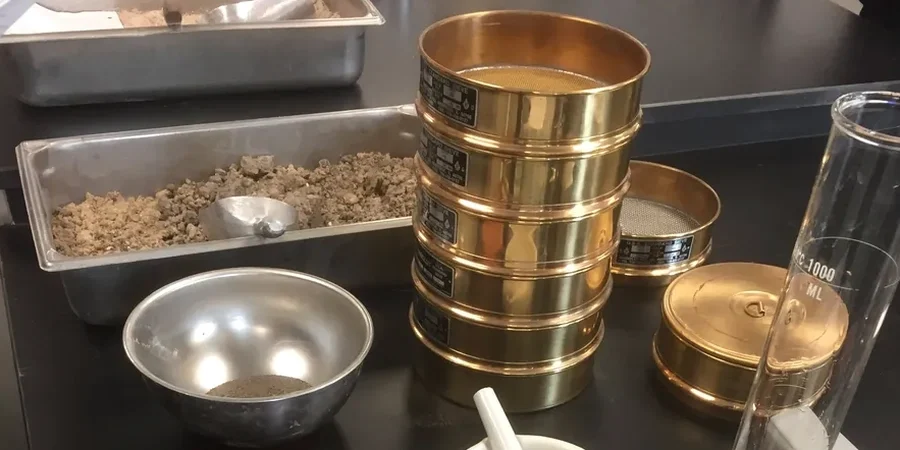
A few months back we were on a site just off the Bath Road, where the ground investigation logs showed a sharp transition from sandy gravel into stiff grey clay within a metre and a half. The contractor needed a precise grain size curve to design the drainage blanket, not just a visual description. That is where a laboratory particle size distribution test stops being a formality and becomes a decision-making tool. In Slough, with its mix of Langley Silt, Taplow Gravel, and the ever-present London Clay Formation, skipping the hydrometer analysis on the fines fraction is a shortcut that comes back to bite you during earthworks. For a project on the Slough Trading Estate, we combined the atterberg limits tests with the full wet sieve suite to confirm the material was a silty clay, not a low-plasticity silt, which changed the compaction specification entirely.
A hydrometer reading at 24 hours tells you more about settlement potential than a dozen standard penetration blows.